
Search warrant
Combs the scene for whatever was left behind.
In the game
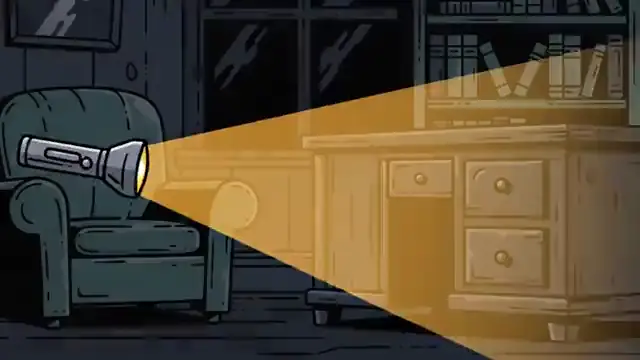
The search warrant sends a team through a room, a piece of furniture or a car looking for what was left behind: a crumpled note, a piece of jewelry out of place, a key that shouldn't be there. In a real investigation, the team photographs, numbers and bags every item before taking it to the lab. In Confessd, you pick the warrant by the place described on the card and only find out what turned up when the report opens.
The search report is dry and factual, stamped Positive, Negative or Inconclusive. An object that turns up becomes a fact in your Clues, and that fact is often exactly what you were missing to ask the right question to someone who thought they had hidden everything. The search can also come back empty on purpose and clear an innocent person. In no case does it hand you the culprit on a plate: the object ties someone to the place, and you pull the rest out of them in conversation.
A search warrant costs 5 to 50 coins, with the price set for each case. It is charged per game: the result stays available until the end of that attempt at no extra cost, and a new game after a loss charges it again. It doesn't use up a question, so it can be worth more than a shot in the dark when you still don't know where to start. The report's clock only starts after the minigame: it comes out after a short wait, and you can rush it for 5 coins.
How the minigame works
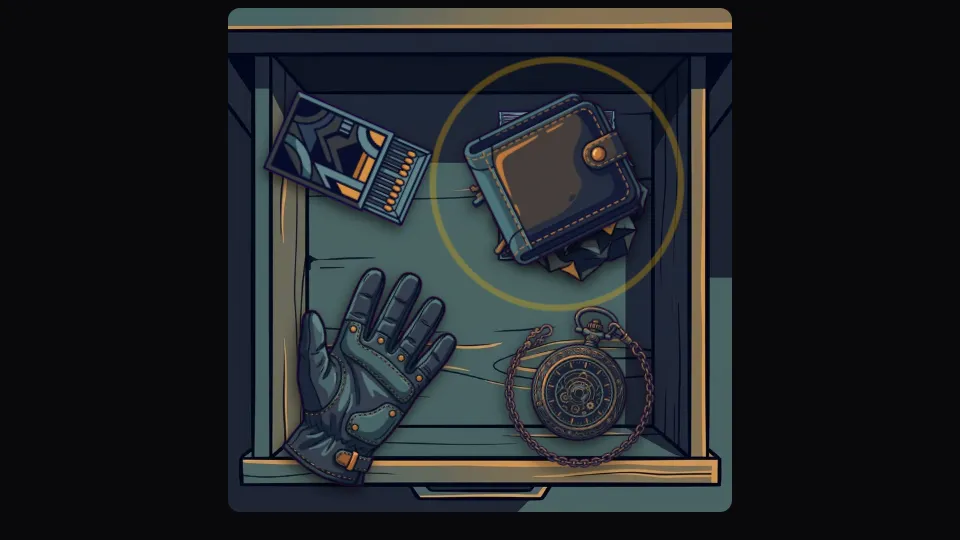
A crowded drawer appears on screen: keys, papers, a wallet, matches, a watch and a glove all over the place. A pulsing ring marks the spot to search, under a pile of objects.
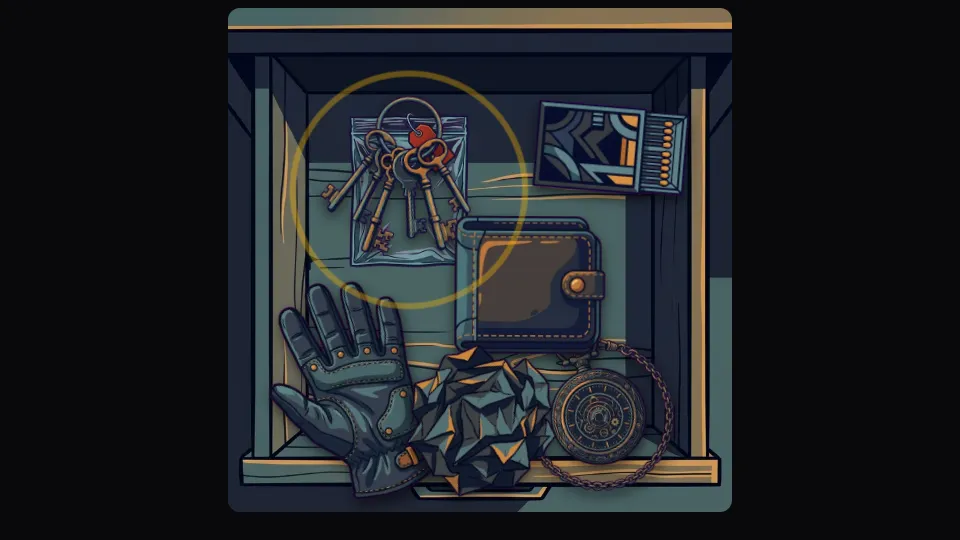
Drag the objects out of the way, one by one, with your finger or mouse. As soon as nothing covers that spot anymore, the evidence bag appears, glowing.
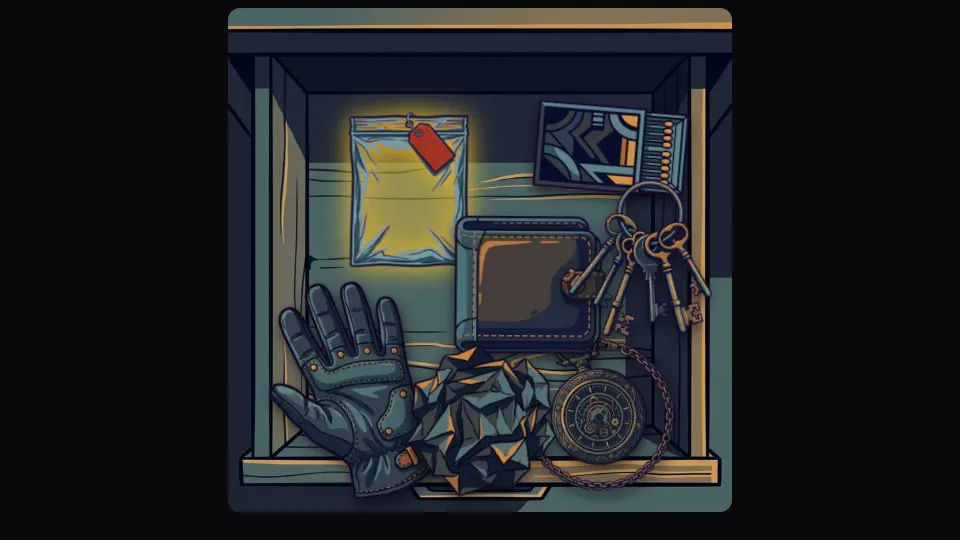
Tap the evidence bag: the search ends, the discovery sound plays and the report opens with what was found.
Try it
Try the minigame

Other forensics
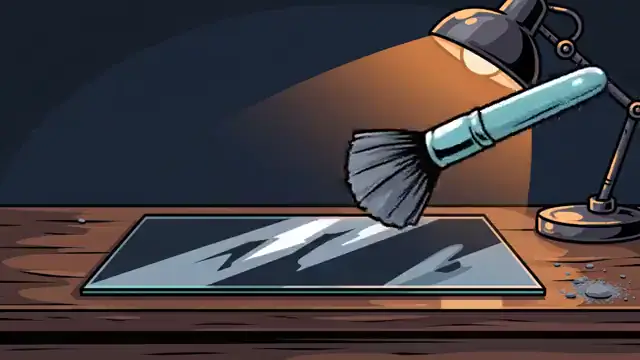 FingerprintsReveals prints on objects and surfaces at the scene.
 DNA testMatches genetic material from the scene against each suspect.
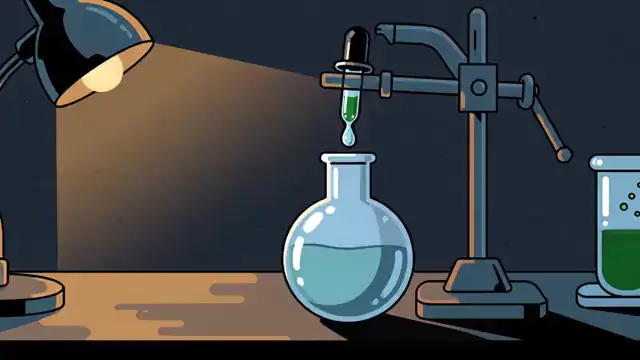 ToxicologyLooks for poisons, medicines and other substances.
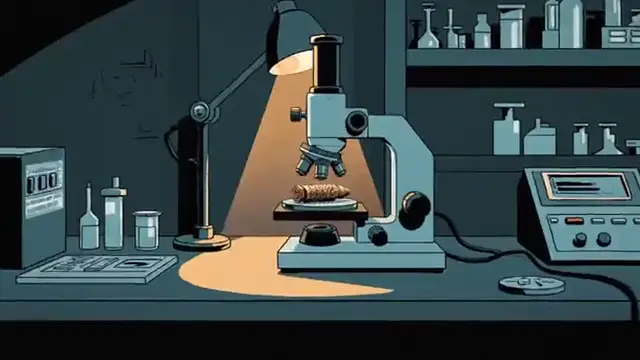 BallisticsLinks a bullet or a weapon to the shot.
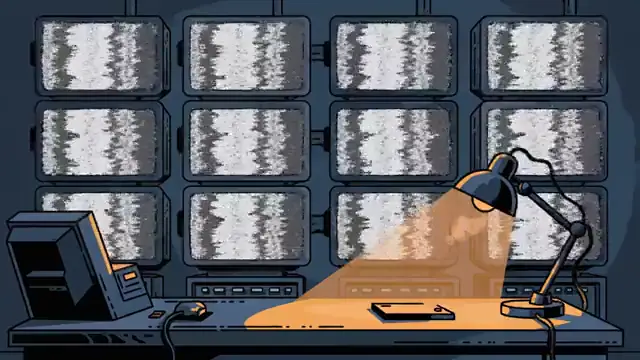 Security camerasReviews camera footage from the time of the crime.
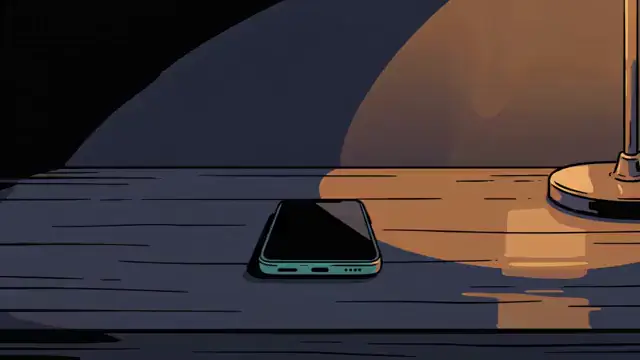 Phone recordsPulls the calls and messages of everyone who was there.
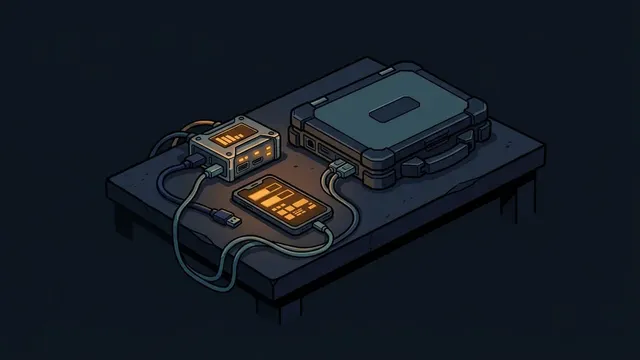 Digital forensicsUnlocks a seized phone or laptop and recovers deleted messages.
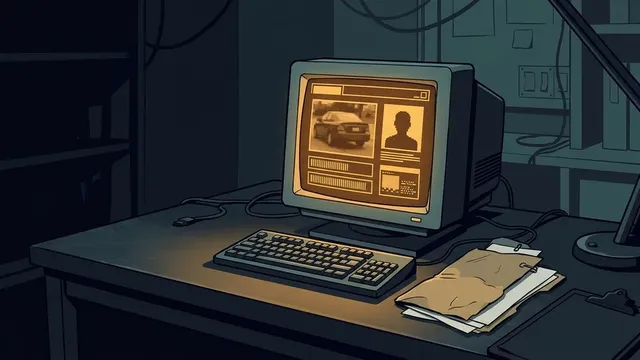 Records and platesPulls someone's record or the owner of a license plate.
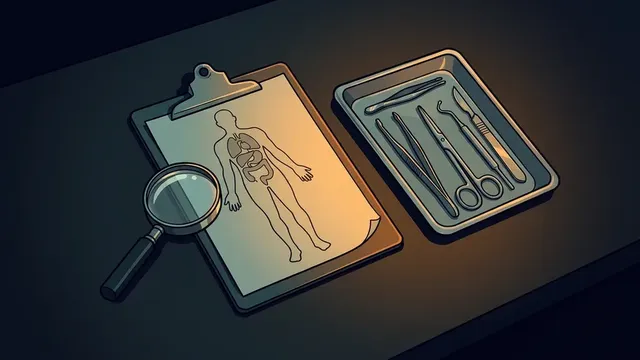 Medical examiner's reportReads the medical examiner's chart for marks the summary left out.
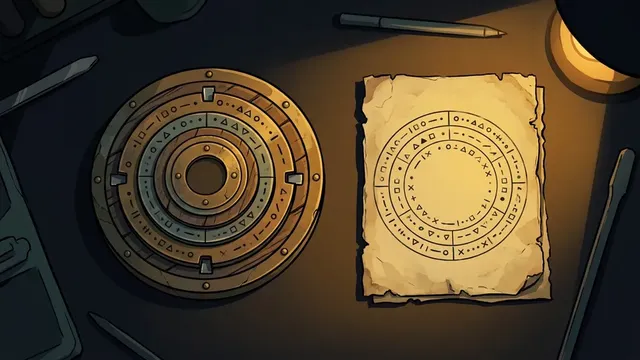 Translation or cipherTranslates or decodes a document in another language or in code.
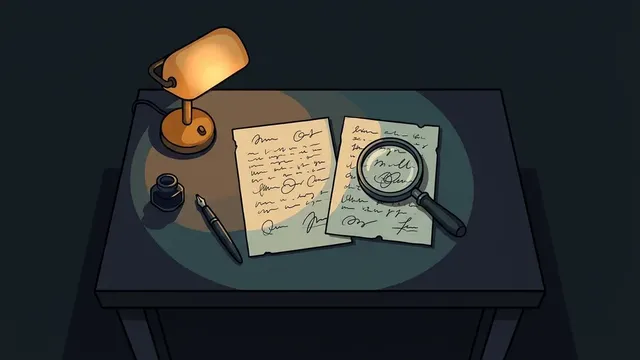 Handwriting analysisCompares the writing or signature on a document with a suspect's.
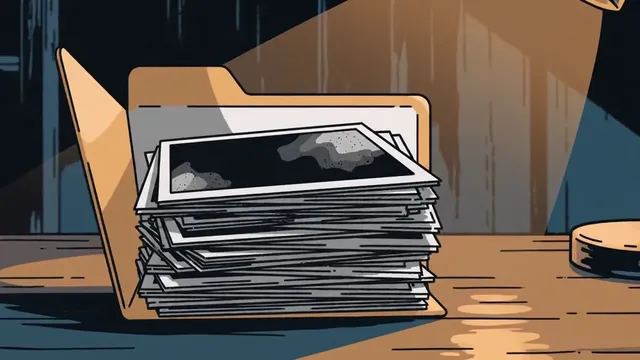 Scene photosOpens the folder with the crime scene photos.