
Confessd cases inspired by real cases
The Inspired by a real case tag
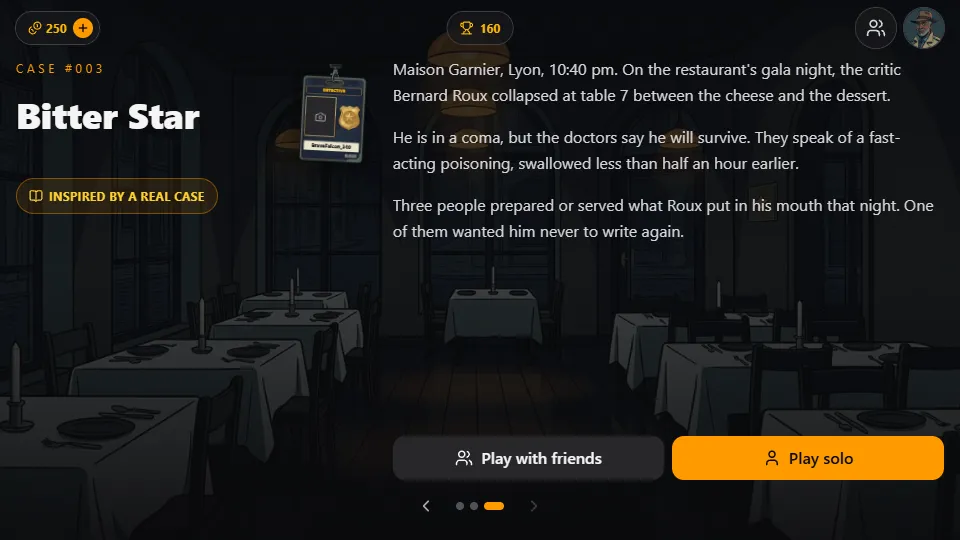
Some Confessd cases are born from crimes and scandals that really happened: the method, the motive, the setting or the decisive lead recall a real case. These cases carry the "Inspired by a real case" tag, an amber pill on the case card, on the app's opening screen, just below the title. The tag appears on the current case card and on cases you've already solved.
There's only one tag, the same for every case. It doesn't say whether the game's case is very or barely similar to the real one: you read the account and draw your own conclusions. Cases without the tag have no account, and they play exactly the same way.
The game is fiction
The game itself is always entirely fictional. Names, places, characters, lines, clues and solution belong to the game, not to the real case. No suspect represents a real person, and the account never says which character resembles whom.
That's why every account comes with the same notice, in the app and on the website: "This case is a work of fiction. The characters, names, places and events in the game do not portray real people. The account below is a factual summary, based on public sources, of the case that served as inspiration."
The account also doesn't reveal who the culprit is in the game. You can read it before or after playing without spoiling the investigation.
The real case sheet
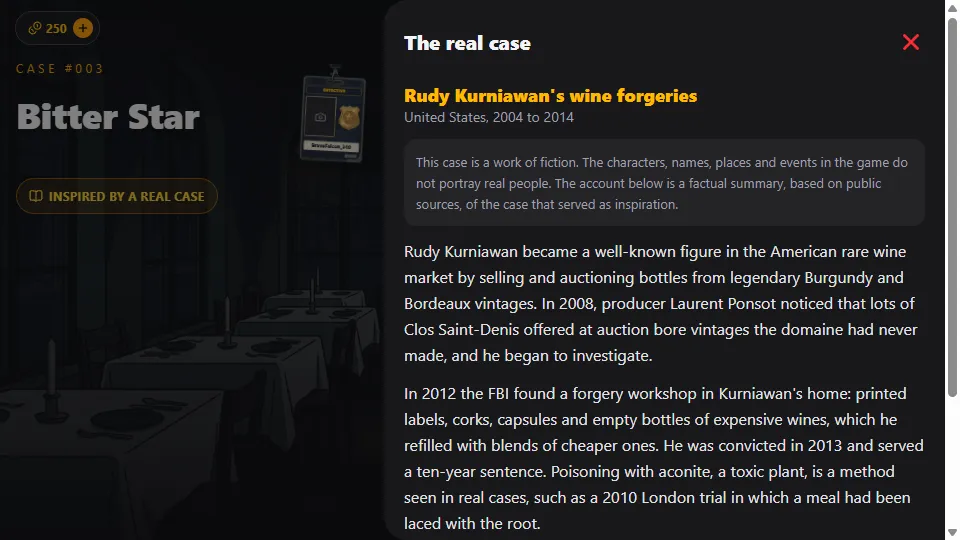
Tap the tag to open "The real case" sheet. At the top is the name of the real case and, in gray, the place and year. Just below, the fiction notice in a discreet box. Then comes the account in three short paragraphs: what happened; how the case was investigated and how it ended; and what the game borrowed, always closing with the reminder that the game's characters, place and outcome are fiction.
At the end is "Sources", with links to the reporting and public records used in the account; they open in the browser. The account comes with the case, so the sheet opens instantly, and it's in your game's language.
The text follows fixed rules: only public, verifiable facts, with at least one source, no sensationalism and with respect for the victims and their families. Anyone who was acquitted or never charged is not named as guilty: the account says what the courts decided and stops there.
Real cases on the website
On the website, the page for each inspired case shows the tag, the name of the real case, the place and year, the fiction notice and the "Read the real case" link. The full account, with sources, has its own page for each real case, and they're all gathered on the page Real cases that inspired the game. When the same real case inspired two cases in the game, its page shows both.
Frequently asked questions
Does the real case account reveal the solution to the game's case?
No. The account only covers the real case and never says which suspect in the game resembles whom. You can read it before or after playing.
Are the game's characters real people?
No. The game's characters, names, places and events are fiction. Only the separate account, with public sources, talks about the real case.
Are all Confessd cases inspired by real cases?
No. Only the ones with the Inspired by a real case tag. The others are created from scratch and have no account.