

Clémence Haag
Authorized copyist at the museum, 26
Clémence Haag is 26 and spends her days in the portrait room of the Museum of the Coopers' House in Colmar, with an easel and a blank canvas. She was born in Sélestat, the daughter of an accountant and a music teacher, and grew up in an apartment where the only painting on the wall was a reproduction of sunflowers. She decided to paint at eleven, after a school field trip, and has never been able to decide anything else. She speaks fast when the subject is paint and hesitates when the subject is herself.
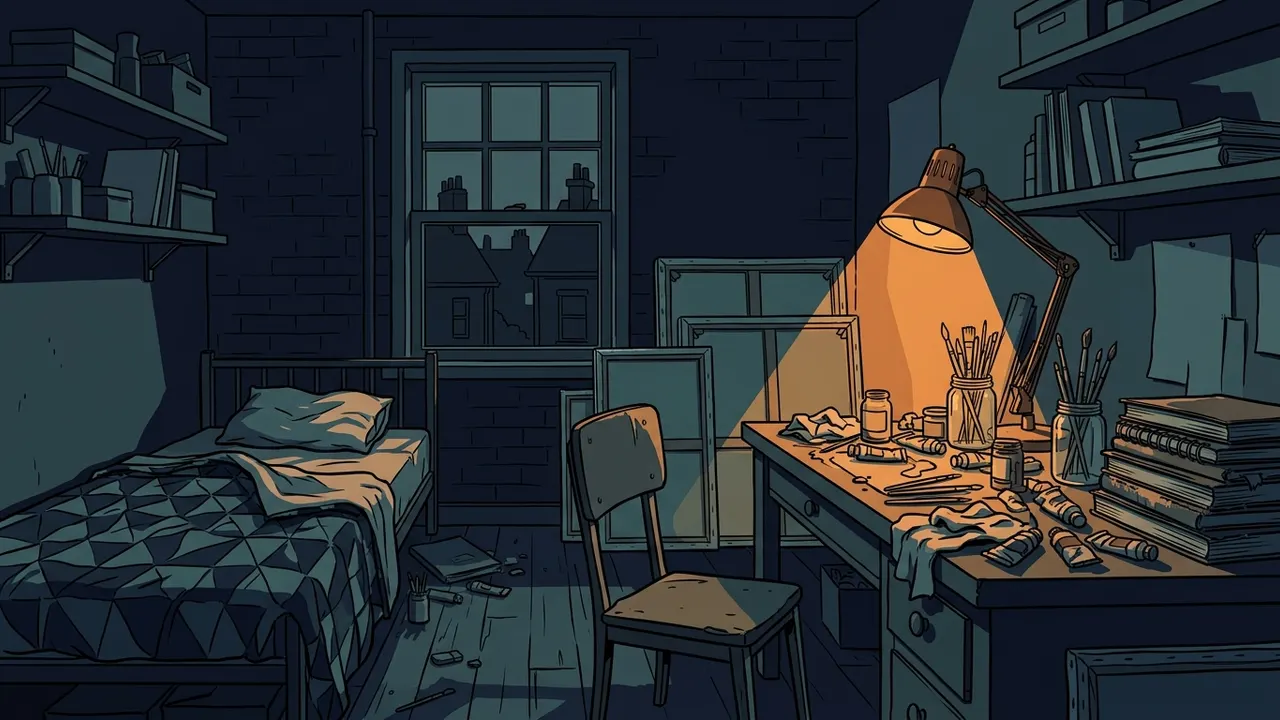
She still lives with her parents, in an exposed-brick two-story house in a new neighborhood of Colmar, in a room with a desk overrun by paint tubes, brushes in jam jars and sketchbooks with worn spines. Her mother leaves a covered plate on the stove every night. Her father reads the newspaper aloud and asks, without looking at her, how her studies are going. Clémence answers that they are going well, and the subject rests there until the next day.
She has long red hair in a loose bun with a brush stuck through it, a nose full of freckles and hands always stained with ochre. She wears a beige canvas apron over a blue strappy dress, its pockets heavy with rags. She walks through the museum on tiptoe, so as not to disturb those looking at the paintings, and speaks to the guard in whispers. She has a shyness that vanishes when she picks up the brush and returns when someone asks what she wants to be.
About the Saturday of the robbery, her account is a routine: at 12:30 she covered the easel with the cloth, left the portrait room and went to lunch at the brasseriebrasserie French café-restaurant, informal and open all day, serving simple meals and drinks. across the way, as every day. She has the director's permission to copy there from nine to five, and the guard knows her schedule by heart. She says she knows that wall better than the room where she sleeps and that her copy is not worth a euro.
Clémence knows that whoever spends three months in a room knows the room best. When the detective points that out, she loses the thread of her sentence, wipes her hands on her apron and looks at the floor. It may be the shyness of an artist treated as a suspect. It may be someone hiding something else behind the cloth that covers the easel. The detective will have to decide which.


Cases unlock in order, like levels. This is case 121 of 200.
The case
The other suspects
 Odile FallerMuseum guard, 59
 Julien ArbogastWaiter at the brasserie across from the museum, 31