
The Los Angeles Central Library fire
Los Angeles, United States, 1986
This case is a work of fiction. The characters, names, places and events in the game do not portray real people. The account below is a factual summary, based on public sources, of the case that served as inspiration.
On the morning of Tuesday, April 29, 1986, the alarm went off in the closed stacks of the Los Angeles Central Library, the 1926 building designed by Bertram Goodhue in the center of the city. The collection was held in interior concrete blocks, with stacked shelves a little over six feet high and almost no ventilation, in a building that had been flagged for years as a fire hazard. The public was evacuated in time, but heat and smoke stayed trapped inside and firefighters took more than seven hours to put out the blaze; small fires kept flaring up for days.
About 400,000 volumes, 20% of the collection, were destroyed, and another 700,000 suffered serious water and smoke damage; replacing the lost books alone was estimated at more than 14 million dollars. Volunteers packed the wet books and took them to refrigerated warehouses, where they were frozen to be dried later. Investigators concluded the fire was arson. On September 3 of the same year, another arson fire destroyed the contents of the music department's reading room, and the library was closed.
Sources
In the game
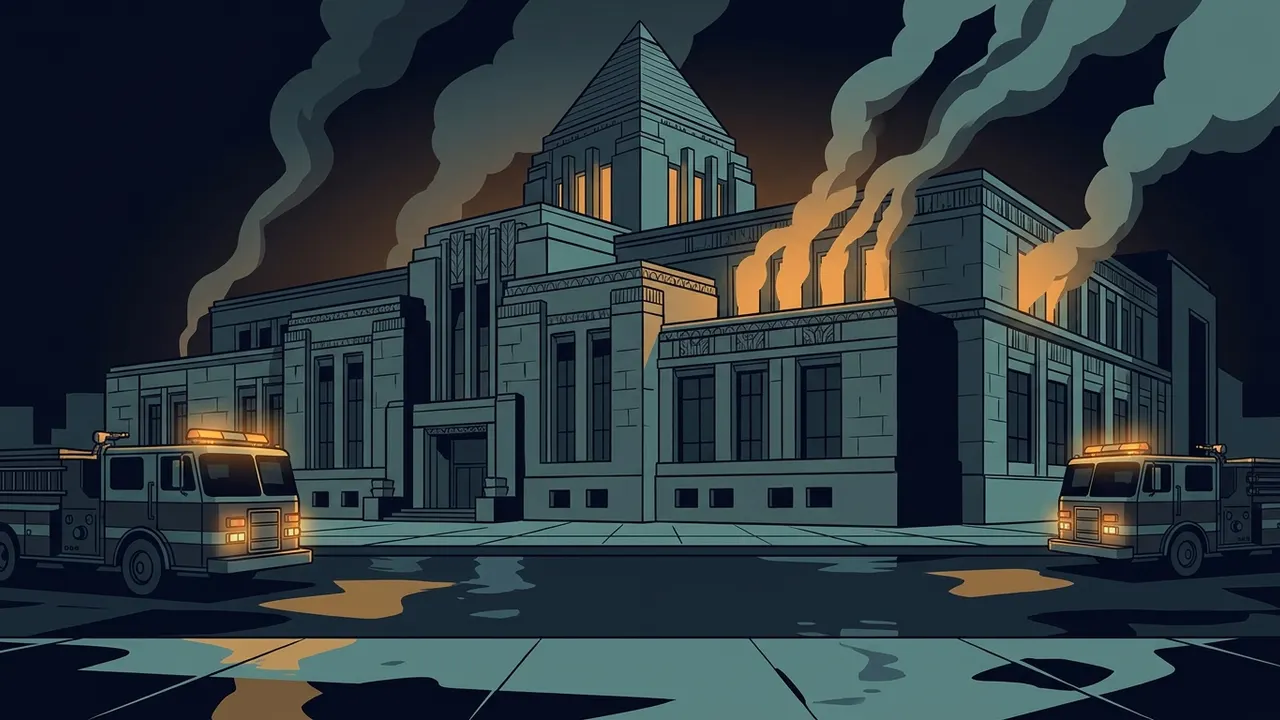
Shelf 813
Los Angeles, Tuesday, April 29, 1986, 8 pm. Across Fifth Street, the Central Library is still smoking from its tall windows. The fire started at 10:52 am and was not brought under control until 6:30 pm.
An aspiring actor who gave different accounts of having been at the library that morning was arrested as a suspect, but was never brought to criminal trial because the evidence was weak; he and the city settled the civil suits they had filed against each other shortly before he died, in 1993. The fire was never officially solved. The tragedy sped up the renovation: the "Save the Books" campaign raised donations, the library sold its air rights to a skyscraper across the street and reopened, restored and expanded, on October 3, 1993. The story was retold in 2018 by journalist Susan Orlean in the book "The Library Book".