
Piltdown Man
Sussex, England, 1912
This case is a work of fiction. The characters, names, places and events in the game do not portray real people. The account below is a factual summary, based on public sources, of the case that served as inspiration.
In 1912, the solicitor and amateur collector Charles Dawson wrote to Arthur Smith Woodward, Keeper of Geology at the Natural History Museum in London, saying he had found pieces of a human skull in a gravel pit at Piltdown, in the county of Sussex. Later digs produced an ape-like jaw with two teeth, animal fossils and stone tools. On 18 December 1912, the find was presented to the Geological Society of London as a very ancient human ancestor, the missing link between ape and man.
In the following years a canine tooth turned up, along with an elephant bone carved into the shape of a cricket bat and, at a second site, more skull fragments and a molar. For four decades Piltdown Man confused the study of human evolution. In the early 1950s, the geologist Kenneth Oakley, of the museum itself, applied the fluorine test and showed that the bones were far more recent than claimed; in 1953, he and the researchers Joseph Weiner and Wilfrid Le Gros Clark announced the fraud: a human skull, an orangutan jaw, teeth filed down to look worn like a man's, and pieces stained to imitate the colour of the gravel.
Sources
In the game
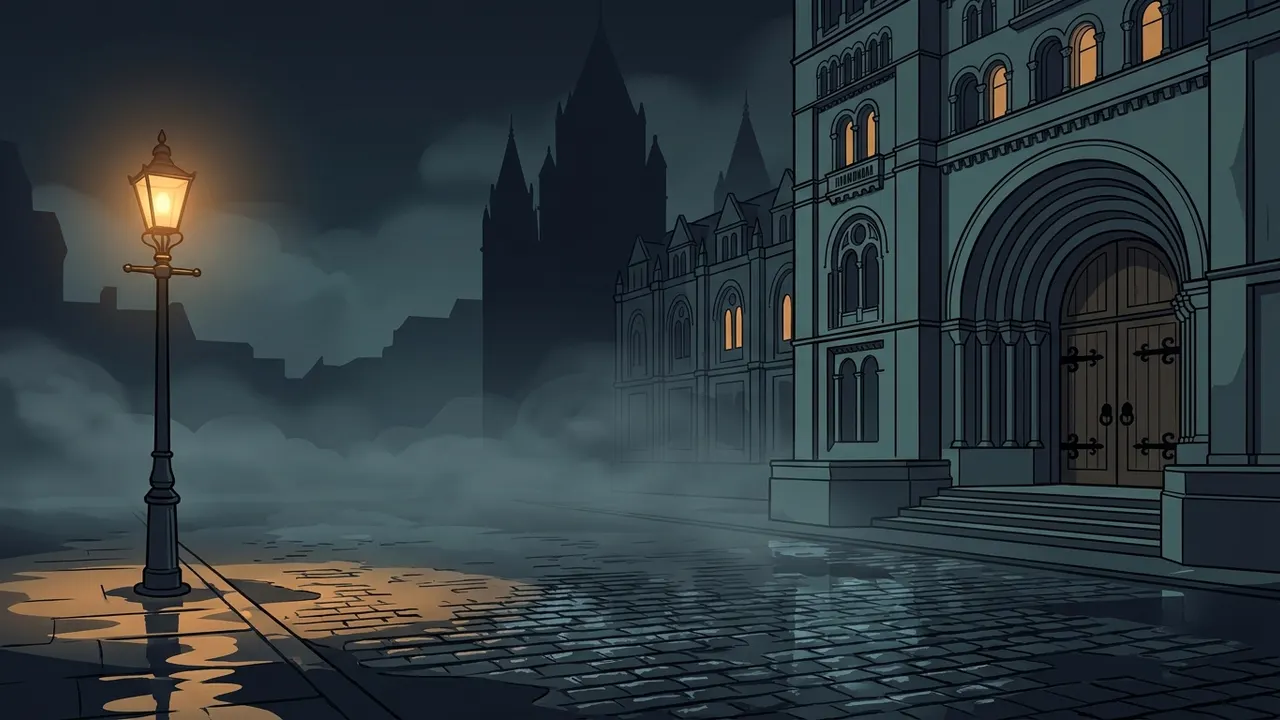
Filed Tooth
London, Tuesday, 17 December 1912, 10 pm. In the preparation room of the natural history museum, a rust-coloured skull rests on green velvet: the "Brackenmoor man", found in a gravel pit in the Sussex countryside.
The author of the hoax was debated for decades, with many names put forward. In 2016, a study published in Royal Society Open Science used tomography, chemical analyses and DNA: the bones from both sites had been packed with gravel and plugged with the same putty, and the teeth came from a single orangutan, probably from Borneo. The identical technique across all the pieces pointed to a single forger, almost certainly Dawson himself, who died in 1916. The motive was never established.