
The disappearance of Louis Le Prince, the cinema pioneer
Dijon, France, 1890
This case is a work of fiction. The characters, names, places and events in the game do not portray real people. The account below is a factual summary, based on public sources, of the case that served as inspiration.
Louis Aimé Augustin Le Prince, born in Metz in 1841, moved to Leeds, England, in 1866 and married the artist Elizabeth Whitley. After a sixteen-lens camera patented in 1888, he built a single-lens camera and, on October 14, 1888, filmed in the garden of his wife's family in Roundhay the oldest known sequence of moving images; soon after, he filmed traffic on Leeds Bridge. He planned to show the invention in public in New York, where his wife and children were.
In September 1890, before returning to England and continuing on to the United States, he visited his brother in Dijon. On September 16 he boarded the train to Paris there, and his brother was the last person to see him, at the station. The friends waiting for him in Paris found he was not on the train, and neither he nor the luggage he carried was ever found. French police, Scotland Yard and the family searched exhaustively without result, and he was declared dead in 1897.
Sources
In the game
Last Wave
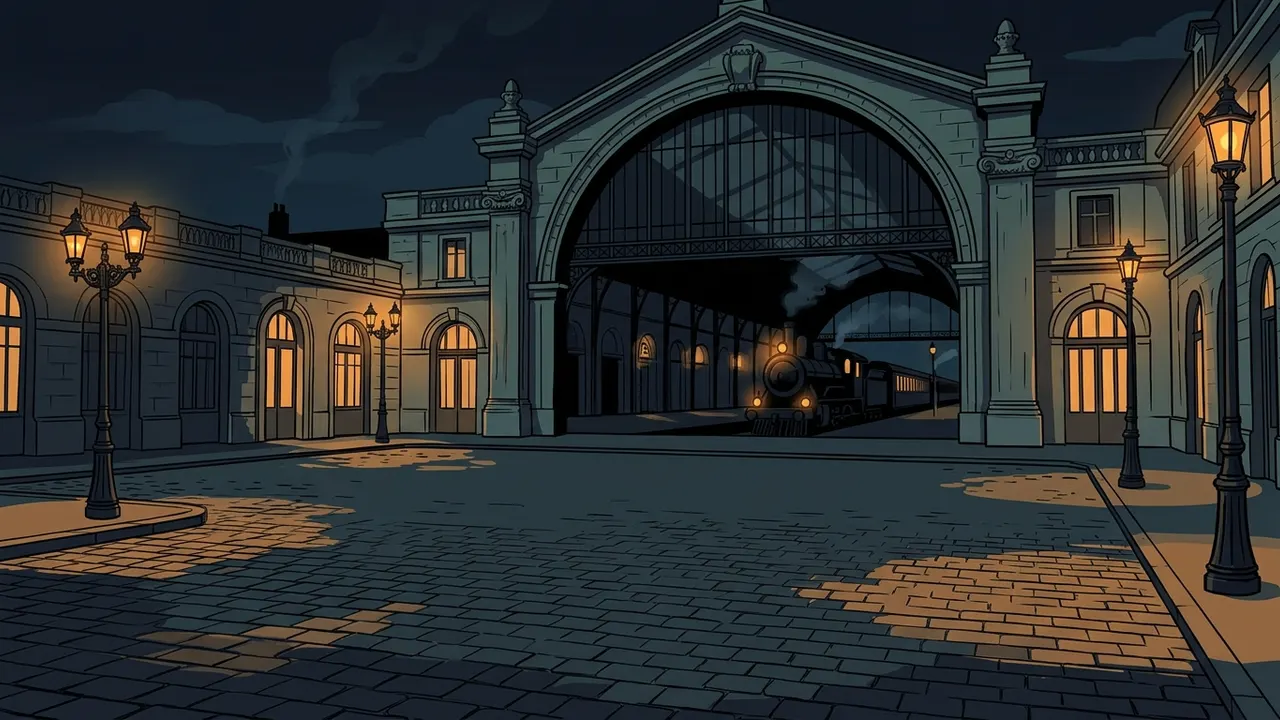
Dijon, Wednesday, September 17, 1890, 7 pm. In the stationmaster's office, the lamp lights a photograph: a man almost six and a half feet tall, in a gray cape, beside a wooden camera with a single lens.
The theories were never proven: suicide over debts, voluntary disappearance, murder tied to the dispute over cinema patents (the family suspected Thomas Edison) and even a crime by his brother for money, a hypothesis raised by the historian Jean Mitry in 1967. In 1898, his eldest son, Adolphe, testified in Edison's case against the American Mutoscope Company, and in 1902 he was found shot dead on Fire Island, near New York. In 2003, the Paris police archives turned up a photograph of a drowned man pulled from the Seine in 1890 who resembled him, though some say the body was too short to be the inventor's.