
The 300 million yen robbery
Tokyo, Japan, 1968
This case is a work of fiction. The characters, names, places and events in the game do not portray real people. The account below is a factual summary, based on public sources, of the case that served as inspiration.
On December 6, 1968, the manager of the Kokubunji branch of the Nihon Shintaku bank received by express mail a letter demanding 3 million yen and threatening to blow up his house. The police set up a stakeout the next day, but nobody showed up. On the morning of December 10, at about 9:15, a branch car left with four employees and 294,307,500 yen in three duralumin cases in the trunk: the year-end bonus of 4,525 workers at the Toshiba factory in Fuchu.
On a street beside Fuchu Prison, a young man dressed as a policeman, on a white motorbike, stopped the car. He said the manager's house had been blown up and that there was dynamite in the vehicle, crawled under it, and then smoke and flames appeared. He shouted that it was going to explode, the bank clerks ran, and the fake policeman drove off in the car with the money; it all took about three minutes. The fire came from a flare. The motorbike was a stolen Yamaha painted white, with a biscuit tin where the document box should be. The bank's car was found in a wooded lot near the ruins of the Kokubunji temple, and the cases had been moved to a stolen car, found months later in a parking lot, with the cases empty.
Sources
In the game
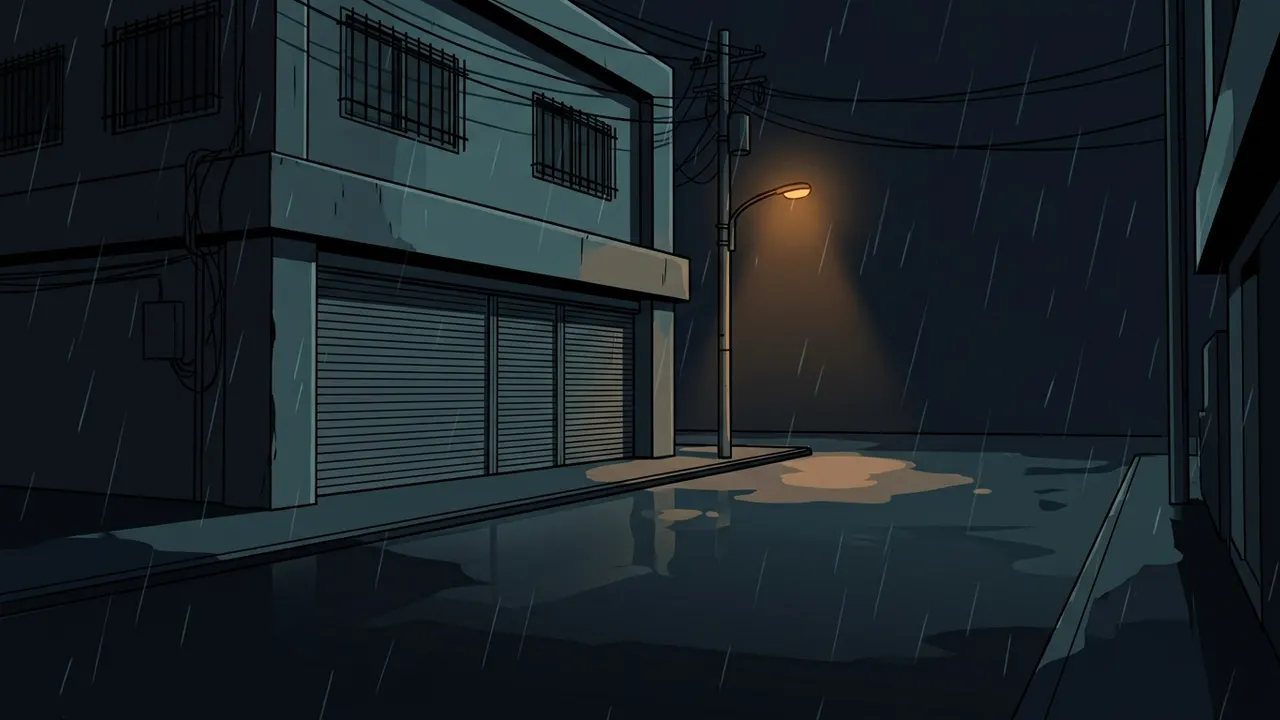
White Motorbike
Tokyo, Tuesday, December 10, 1968, 9 pm. The rain has not stopped all day. In the manager's office of a Minori Trust Bank branch on the western edge of the city, the telephone keeps ringing.
It was the largest investigation in Japanese history: more than 170,000 police officers over seven years and about 110,000 names on the suspect list. A 19-year-old, the son of a policeman, was singled out early on and died of cyanide poisoning on December 15, without anything being proved. The composite portrait, spread on hundreds of thousands of posters, used the photo of a man who resembled him and ended up misleading the search. Because the money was insured, the workers received their bonus the next day. The crime reached the statute of limitations on December 10, 1975, and civil liability expired in 1988. The culprit was never identified, and the money never turned up.