
The murder of Sir Harry Oakes
Nassau, Bahamas, 1943
This case is a work of fiction. The characters, names, places and events in the game do not portray real people. The account below is a factual summary, based on public sources, of the case that served as inspiration.
In the early hours of July 8, 1943, during a violent storm, Sir Harry Oakes, 68, was killed in his bed at Westbourne, his mansion at Cable Beach on the island of New Providence. American-born, Oakes had become a millionaire through the Lake Shore gold mine in Kirkland Lake, Canada, was granted a British baronetcy and moved to the Bahamas, where he became one of the most powerful men in the colony. He was struck four times behind the left ear; the body was then burned with insecticide and covered in pillow feathers, which the bedroom fan was still scattering when he was found.
Harold Christie, a real estate broker, friend and business partner of Oakes, had dined and slept at the house that night. He said he woke up with the storm, heard nothing suspicious and found the body in the morning, when he knocked on the door to call his friend to breakfast. A Nassau policeman later claimed to have seen him driving in town during the night. There was a handprint on the wall beside the bed and muddy footprints on the stairs, but the scene was poorly preserved. The governor, the Duke of Windsor, called in two Miami detectives, who within about 36 hours arrested Oakes's son-in-law, Count Alfred de Marigny, married to the daughter Nancy against her parents' wishes.
Sources
In the game
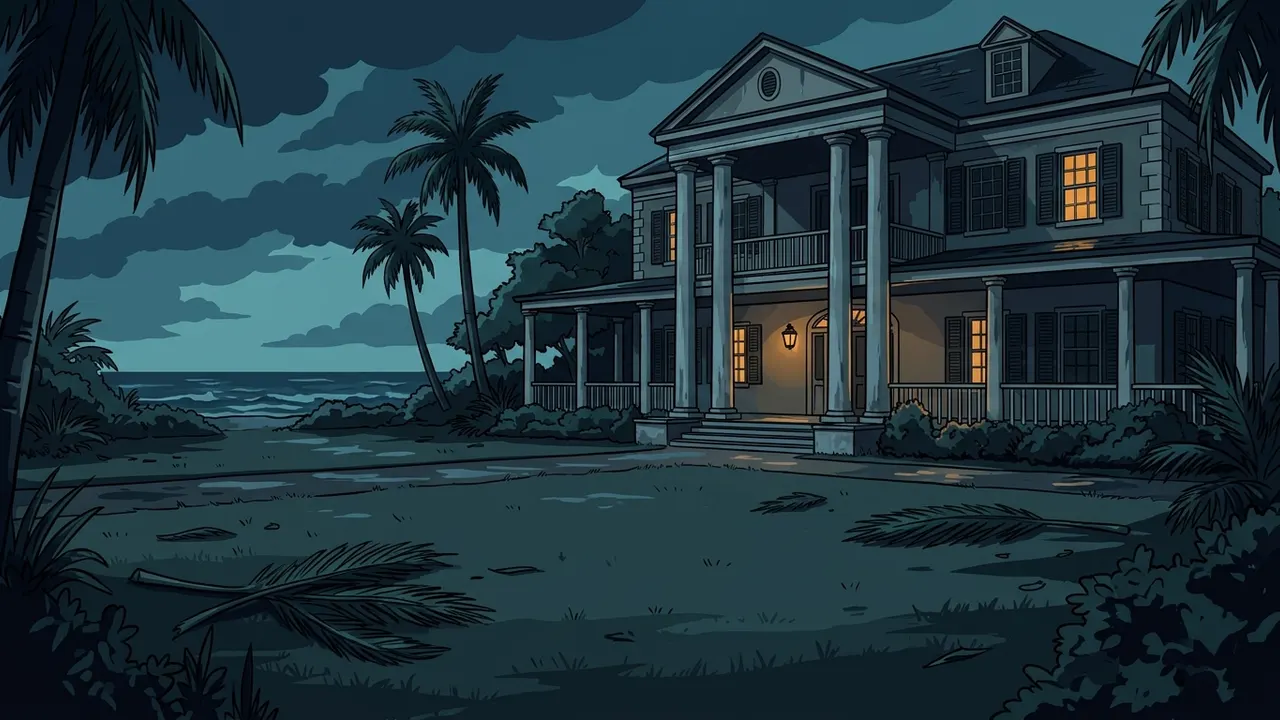
Feathers in the Wind
Nassau, Bahamas, Thursday, July 8, 1943, 10 am. In a colonial mansion at Cable Beach, gold magnate Ambrose Tallis, 68, was found dead in his bed at 7 am, after a night of storms.
The trial began on October 18, 1943. The prosecution relied on a fingerprint the detectives said they had found on a screen in the bedroom; the defense showed it had been poorly documented and had probably been lifted from a glass De Marigny used during questioning, and the jury acquitted him in November. The jury recommended that he be deported from the colony, which eventually happened. No one else was ever charged, and the murder of Harry Oakes remains officially unsolved.