
How to read a suspect's face in Confessd
Four faces per suspect
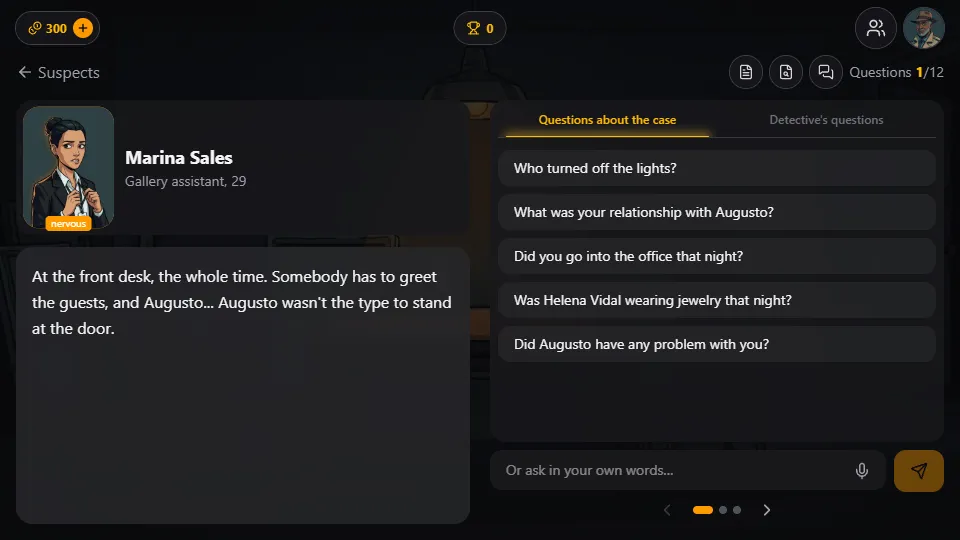
Every Confessd suspect has four expressions, and their photo changes with each answer: calm, nervous, angry and shaken. The face comes with the line and stays on their card even when you go back to the suspects screen, so you can tell at a glance how each one ended their last conversation.
The face is part of the answer, written for that question. It isn't random: if the expression changed, the question struck a nerve.
What each expression means
Calm: the question didn't bother them. Either the subject has nothing to do with their secret, or they feel safe in their own version.
Nervous: you got close to something. It's worth rereading the answer to see if it became a clue or unlocked a new question.
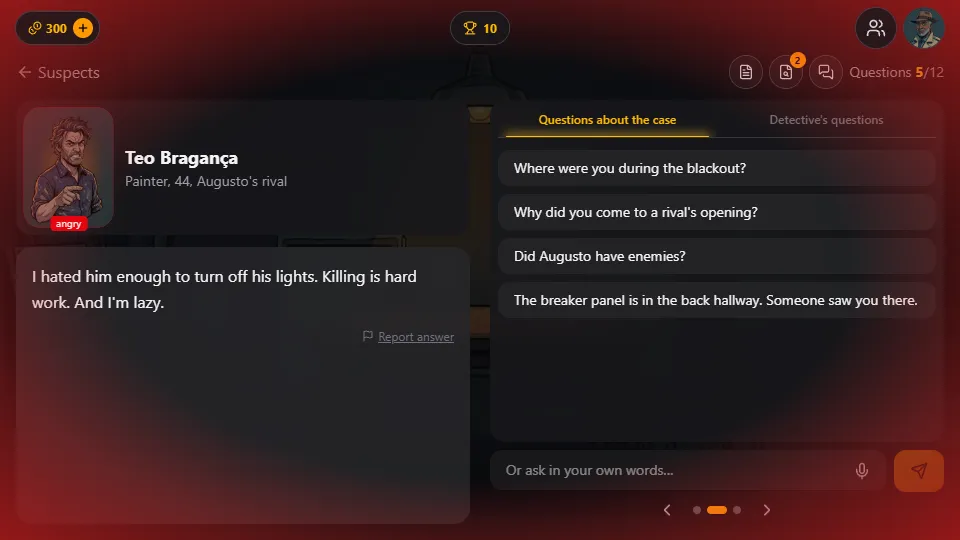
Angry: the suspect shut down. This happens when you insult them or accuse without evidence, and also with some questions that push too hard. Those questions tend to count as two on the counter, and one of them can even bring in the lawyer.
Shaken: the suspect broke down. It's the face of someone who just had something exposed. The confession comes from an answer like that, but an innocent person also gets shaken when their embarrassing secret comes out.
Anger is a lead too
When the suspect answers angrily, the room changes: the music turns into heavy rock and the edges of the screen pulse red. On your phone, the device vibrates three times. The effect lasts until the next answer; if that one comes in a different tone, everything goes back to normal. Leaving the room also switches it off.
Anger isn't a sign of guilt. But it shows where the raw nerve is. If the anger came from a question about a specific subject, that's the subject worth finding a clue about. Pressing again without evidence usually just burns questions.
If your typed question was rude, the anger is just a reaction to your tone. Rewrite it with evidence in hand.
How to use the face to your advantage
Before choosing who to talk to, look at the cards. Whoever ended up nervous deserves a second round.
Don't read the face on its own. Combine the expression with what the person said and check it in Statements. A nervous face that lines up with a contradiction is much stronger than a nervous face on its own.
When you accuse, what counts is the evidence, not the face. Nobody gets arrested for looking guilty.
Frequently asked questions
Is an angry suspect always the culprit?
No. Any suspect can get angry. Anger shows that the question touched a sore spot, not who committed the crime.
Why does my phone vibrate during the interrogation?
It vibrates three times when the suspect answers angrily, and hard when an event happens, like the lawyer's arrival.
Does the face change if I leave and come back to the same suspect?
The photo keeps the last expression. The music and the red edges of anger only come back with a new angry answer.