
The theft of the Mona Lisa from the Louvre
Paris, France, 1911
This case is a work of fiction. The characters, names, places and events in the game do not portray real people. The account below is a factual summary, based on public sources, of the case that served as inspiration.
On the morning of Monday, August 21, 1911, the day the Louvre was closed to the public, the Italian glazier Vincenzo Peruggia walked into the museum wearing the white smock used by the staff. He had worked there installing the glass cases that protected the artworks. He took the Mona Lisa off the wall of the Salon Carré, left the frame and the glass on a service stairway, and walked out through a door that a plumber, thinking he belonged there, opened for him.
The painting was not missed until the next day, and the museum stayed closed for a week. The expert Alphonse Bertillon found a fingerprint on the glass, but police files generally held only the right thumb of those on record, and the mark led nowhere. The poet Guillaume Apollinaire was jailed for a few days, and Pablo Picasso was questioned. Peruggia kept the painting for about two years in a wooden trunk, which several accounts describe as having a false bottom, in the room where he lived in Paris.
Sources
In the game
Stolen Smile
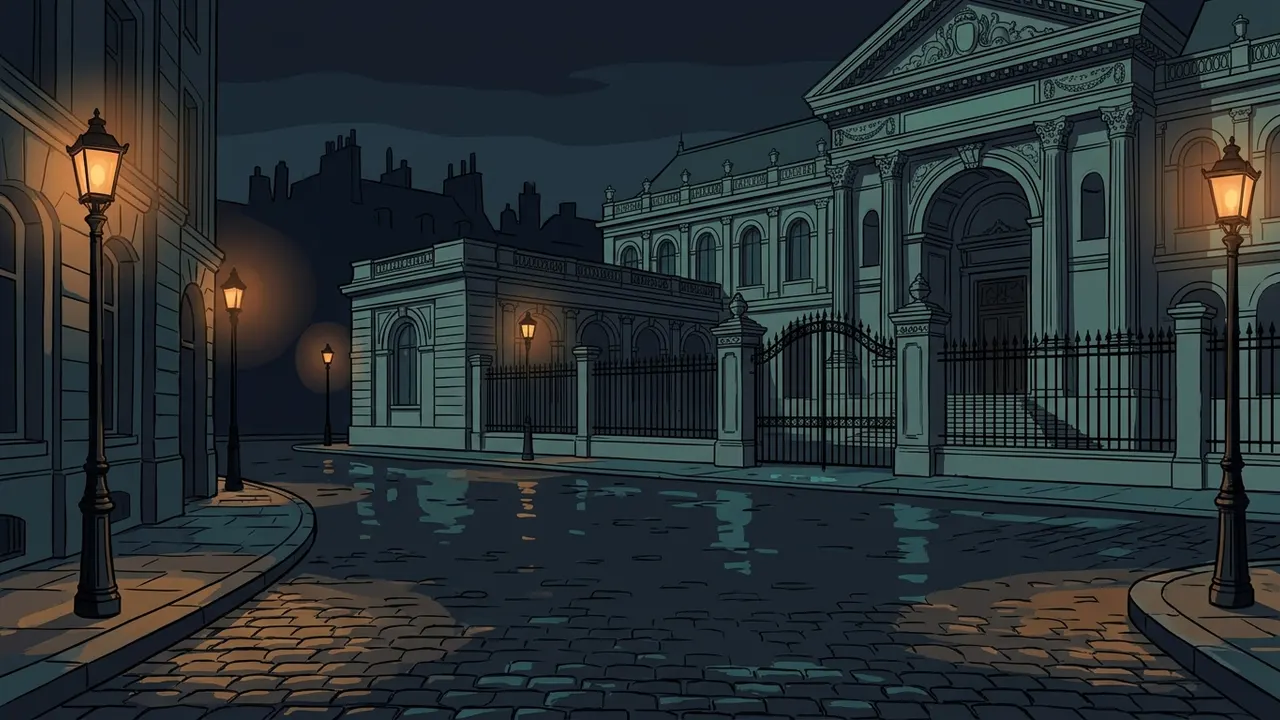
Paris, August 1911. A great museum in the city, Tuesday, 9:00 am. Only four iron hooks are left on the wall of the Square Room: the portrait of the Lady with the Smile, the most famous work in the house, is gone.
In December 1913 he took the painting to Florence and offered it to the dealer Alfredo Geri, who called in the director of the Uffizi Gallery, Giovanni Poggi, to authenticate it. Police arrested him at his hotel. Peruggia said he acted out of patriotism, to return the work to Italy, and was sentenced to one year and fifteen days in prison, reduced to seven months. The Mona Lisa returned to the Louvre in January 1914.